

We're here to change the experience of people with Vestibular Disorders. ✨
What Meni is
Meni was born from a personal experience, but it's not just an individual story.
It's a project that seeks to help people with vestibular disorders (and other complex conditions) track their day-to-day, identify patterns, and have better tools to understand what's happening to them and how to act on it.
Today, much of the most valuable information about these disorders:
•isn't recorded
•gets lost
•or stays fragmented across conversations, loose notes, or imprecise memories
Meni tries to change that, starting with something simple: giving the patient's experience a place.
Why we use AI (Artificial Intelligence)
(and why in this case it makes sense)
The main problem it tries to solve isn't the lack of data, but the way we collect it.
In healthcare, we usually ask the patient to:
•pick predefined options
•fill out rigid scales
•translate their experience into forms
That tabulates, but it also limits.
AI allows for something different: free-form recording, in natural language, like a conversation, which can then be:
•organized
•analyzed
•and turned into useful signals
In this context, AI speeds things up because it can:
process large volumes of unstructured text,
identify patterns that aren't obvious at first glance,
connect symptoms, habits, contexts, and sensations that are usually kept apart.
It doesn't replace medical judgment or the patient's experience — it helps organize what already exists, but was previously too costly to process.
Initial goal
In this first stage, Meni doesn't try to diagnose or cure.
It aims for something more basic, but not easy:
•helping the patient see themselves more clearly
•identifying patterns in their own experience
•and arriving better prepared to conversations with health professionals.
Some simple examples:
•If certain habits worsen symptoms, being able to detect it.
•If something that usually helps (like exercise) stops appearing in the logs, noticing it.
•If medication isn't being taken regularly, making it visible.
All of this is usually lost today because:
•it's costly to record
•hard to process
•and no one has time to do it manually.
A bigger goal
Beyond the individual impact, Meni aims for something broader
•give visibility to disorders that are still poorly understood,
•collect data that doesn't exist or isn't used today,
•and build a better foundation for future research.
When the patient's experience isn't recorded, it isn't studied, and what isn't studied doesn't improve.
Empowering the patient is also about expanding collective knowledge.
Meni was born from a personal experience, but it's not just an individual story.
It's a project that seeks to help people with vestibular disorders (and other complex conditions) track their day-to-day, identify patterns, and have better tools to understand what's happening to them and how to act on it.
Today, much of the most valuable information about these disorders:
•isn't recorded
•gets lost
•or stays fragmented across conversations, loose notes, or imprecise memories
Meni tries to change that, starting with something simple: giving the patient's experience a place.
(and why in this case it makes sense)
The main problem it tries to solve isn't the lack of data, but the way we collect it.
In healthcare, we usually ask the patient to:
•pick predefined options
•fill out rigid scales
•translate their experience into forms
That tabulates, but it also limits.
AI allows for something different: free-form recording, in natural language, like a conversation, which can then be:
•organized
•analyzed
•and turned into useful signals
In this context, AI speeds things up because it can:
process large volumes of unstructured text,
identify patterns that aren't obvious at first glance,
connect symptoms, habits, contexts, and sensations that are usually kept apart.
It doesn't replace medical judgment or the patient's experience — it helps organize what already exists, but was previously too costly to process.
In this first stage, Meni doesn't try to diagnose or cure.
It aims for something more basic, but not easy:
•helping the patient see themselves more clearly
•identifying patterns in their own experience
•and arriving better prepared to conversations with health professionals.
Some simple examples:
•If certain habits worsen symptoms, being able to detect it.
•If something that usually helps (like exercise) stops appearing in the logs, noticing it.
•If medication isn't being taken regularly, making it visible.
All of this is usually lost today because:
•it's costly to record
•hard to process
•and no one has time to do it manually.
Beyond the individual impact, Meni aims for something broader
•give visibility to disorders that are still poorly understood,
•collect data that doesn't exist or isn't used today,
•and build a better foundation for future research.
When the patient's experience isn't recorded, it isn't studied, and what isn't studied doesn't improve.
Empowering the patient is also about expanding collective knowledge.
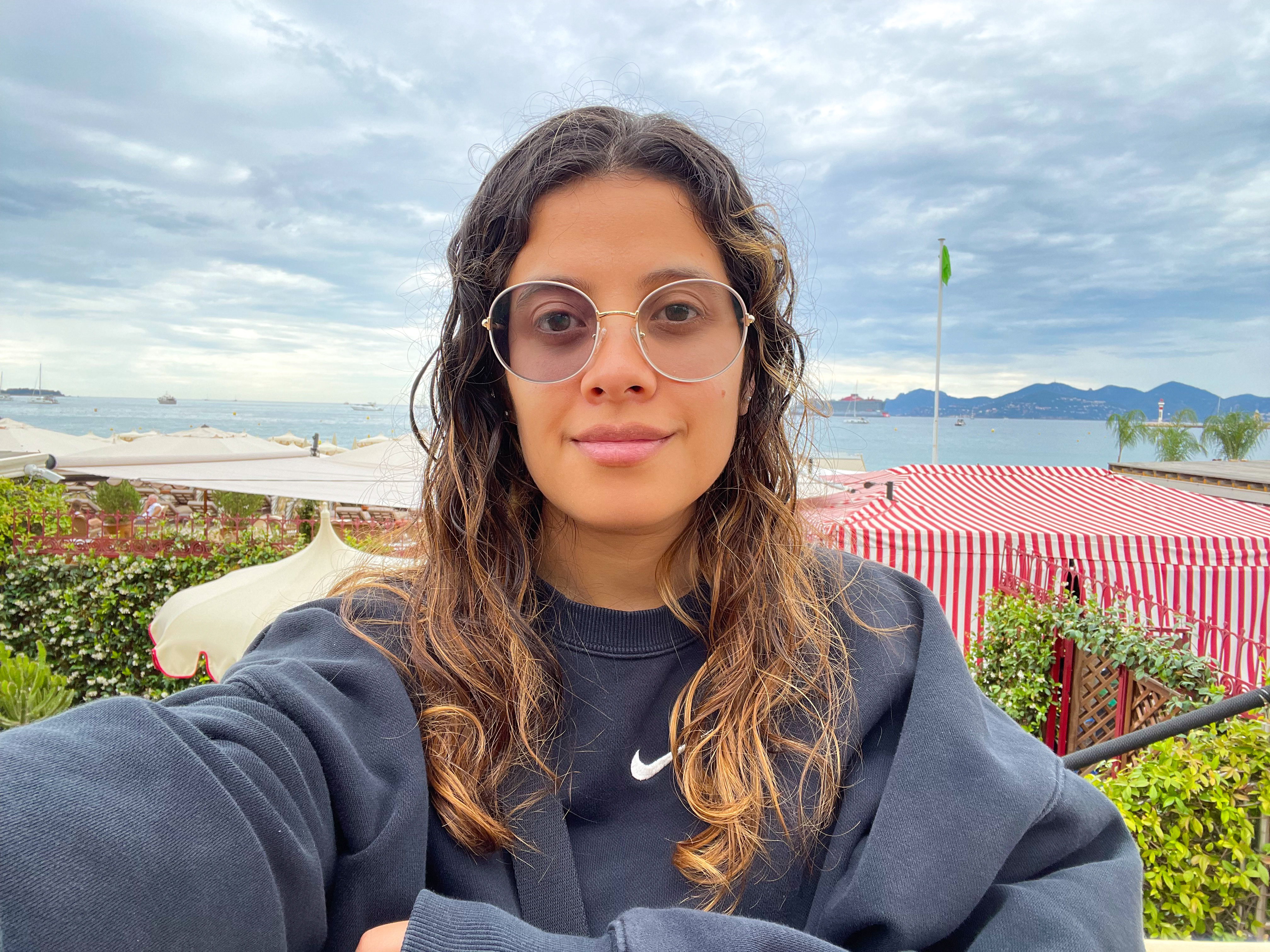
I'm an entrepreneur and designer, with experience in development and product.
Master's in Interactive Design, currently pursuing a Master's in AI Applications in Health, exploring how these tools can be applied responsibly in health contexts.
I am a Ménière's patient.
Meni comes from living with a vestibular disorder for almost my entire life, and from academic and practical research on how we design systems, tools, and experiences for people with vestibular disorders.
This project is a combination of:
•personal experience
•research
•design
and a very concrete need: having better tools to understand what's happening to us.